Updated: It’s been brought to my attention that even as a rudimentary overview, there are some inaccuracies in the “metal” section. I definitely defer to the experts, as this isn’t my strong area of knowledge and I’m just trying to share what I’ve taken away from my course here. Please comment!
Note: All information below is based on my notes from my History of Rock course. The songs found at the bottom will be competing in our “Most Influential Rock Song of all Time” (MIRST) tournament, which will begin here at LivingTheDream.org on Sunday, August 20th.
MTV was a launchpad for pop success, but there were many other scenes developing in the 80s off the main corporate radar. The growth of three distinct musical styles in this period is notable and important in the history of rock- heavy metal, rap, and alternative.
Heavy Metal
The early days of heavy metal begins as a separation from traditional blues-based rock at the end of the 70s and beginning of the 80s. Early prototypes for things to come include Iron Butterfly, Black Sabbath, Deep Purple, and Led Zeppelin. One might think of “Kashmir” particularly as a representative example of heavy metal’s predecessor roots. The image of heavy metal in the early 80s was one of an audience of blue collar, working class individuals possibly prone to violence- emergence of the phrase “headbangers.”
 Metal’s geographic roots come out of two areas- London/North England and Los Angeles. In Britain, the New Wave of British Heavy Metal (NWBHM) emerges. Preceding NWBHM was the music created by both Ozzy Osbourne as an independent artist as well as Black Sabbath with new singer Ronnie James Dio. Defined by heavy driving guitar and deep drum beats. Other Brits in this group include Judas Priest, Iron Maiden, Def Leppard, and Motorhead. In LA, the metal style is characterized by high screams, loud assertive drumming, and anthem-like vocals; consider Van Halen, Quiet Riot, Ratt, and Motley Crue.
 Simultaneous to the underground metal scene, there is a more mainstream-oriented metal that is hitting it big on the charts with more crossover popularity. Bon Jovi’s Slippery When Wet (1986) and Guns N’ Roses’ Appetite For Destruction (1987) huge successes (AFD the Rumours of 80s metal.) This success leads to more popular acceptance of the metal market- MTV creates the show “Headbangers Ball.” In Los Angeles, hair bands emerge that are a bit more glam influenced and oriented toward make-up/spandex styles. Poison is the leader here, and its song “Every Rose Has Its Thorn” in 1988 might be thought of as the prototypical power ballad. Last, should note the rise of ambitious metal bands too- more of a progressive rock approach to the music, a combination of loud and soft sounds and a blend of speed and thrash metal styles. Metallica the market leader here, along with Megadeth, Antharax, and Slayer. Very dependent on virtuoso instrument playing as well as a focus on the song itself. These artists were deeply dedicated to rehearsals and perfection- in a way, carrying the torch of the “hippie aesthetic” from yesteryears, constant innovation in styles and playing.
Rap
 Rap arises out of New York’s African-American and Latino communities and out of the Bronx specifically. The style begins as rising out of neighborhood parties done in the style of the Jamaican record parties mentioned in the reggae post. DJ Kool Herc had moved to the Bronx from Jamaica and began emulating with a mix of vinyl spinning and speaking on the microphone over the music. Develops the idea of the MC and standardizing breakdancing as the style of choice for hip hop parties. The technical innovation here is prolonged breaks in songs- with 2 turntables and identical records on each, can bring records back and extend breaks to encourage spoken word and/or dancing. Grandmaster Flash comes to the Bronx from Barbados and provides additional technological innovations including punch phrasing and scratching. Third key figure in late 70s rap was Afrika Bambaata, who starts the Universal Zulu Nation and focuses on using rap to keep kids out of gangs.
 The first rap record was the brainchild of Sylvia Robinson, who overheard a group of kids chanting over an elongated break of Chic’s “Good Times.” Robinson had minor success in the R&B scene going back to 1958, decides to get group together to lay down a novelty record of sorts. The group names itself Sugar Hill Gang, and the song is 1979’s “Rapper’s Delight.” Other early innovative vinyls include Kurtis Blow’s “The Breaks (Part 1)” (1980) and Grandmaster Flash & The Furious Five’s “The Message” (1982.) Proof that rap can in fact be transferred to vinyl with success and doesn’t have to just exist at block parties.

Russell Simmons and Rick Rubin
The cross-over of rap to a broader audience base can be credited to Russell Simmons, Rick Rubin, and Def Jam Records. They had early success with LL Cool J, whose 1985 single “I Can’t Live Without My Radio” was featured in the cult classic movie Krush Groove. However, their big crossover success comes with the work of Run DMC. Their 1984 song “Rock Box” purposefully incorporates distorted guitar (taking a page from the “Beat It” guitar use.) However, the big success here is in 1986’s “Walk This Way” in collaboration with Aerosmith. Last, The Beastie Boys also have a lot to do with the crossover success of rap- Licensed To Ill (1986) was the first rap album to hit #1 on the charts.
In the late 80s, rap begins to foray into areas of social and political criticism both out of the East Coast and the West Coast. Ice-T, NWA, Boogie Down Productions, and Public Enemy (with varied levels of anger) all produce influential music addressing issues like urban blight and police brutality. Queen Latifah first popular female rapper with her album All Hail The Queen (1989.) MTV recognizes the popularity of rap and launches Yo! MTV Raps in August of 1988.
Alternative Rock

R.E.M., 1985
While punk did largely go new wave in the 80s, an element of underground punk remained that got more hardcore and continued with the D.I.Y. aesthetic and anti-establishment themes. Fear, Black Flag, Minutemen, Bad Brains, Minor Threat, The Replacements, and Husker Du. Also in the 80s was the rise of college rock, idea of developing an “alternative” to the industry music on FM rock stations. Mid-80s groups realizing great success through these avenues were R.E.M., Dinosaur Jr., The Pixies, Sonic Youth, and The Smiths (who were from UK but got great levels of radio play on college stations.)

 It was 1995. The deck was wet. It was the winter, an indoor alabaster pool with 8 lanes and starting blocks standing like sentinels to launch a given competitor into the abyss spotlife of being underwater. Swimmers that were faster than me surrounded my cold awkward 12 year oldedness. That was how it was, but I had friends that were more my speed. That’s how the cliques worked in competitive swimming around DC. The fast kids were friends with each other, and the medium speed kids were friends with each other, and when the slow kids showed up to populate Heat 1 and 2 at an open meet, no one paid much mind. The fast kids were rich, or at least I assumed they were— they had fancy wraparound robes with their initials embroidered on them. They were parkas. They were ridiculous. And they were mean.
 It is difficult to truly latch on to historical importance of any given incident within 25 years of today. However, this represents a best shot at what constituted a continuation of trends studied in the 80s. The first and foremost musical trend to be noted is the rise of alternative rock. Altrock itself was catalyzed by the success of Nirvana’s Nevermind (1991) but that in turn took pages from REM’s Document (1987.) The key takeaway here is the transition from college rock radio to mainstream. In the midst of the popularity of alternative rockers in this era (including Pearl Jam, Soundgarden, Alice In Chains, Red Hot Chili Peppers, Stone Temple Pilots, and Smashing Pumpkins among others) is the perennial question of “selling out.”
 Metal sees a mixing with alternative sounds as well as rap styles in the 90s. Rage Against The Machine is perhaps the best example of this, but also notable are Korn, Limp Bizkit, System Of A Down, and Kid Rock. An industrial rock style arises simultaneously, blending electronic options with live performances- see Nine Inch Nails and Marilyn Manson.
 New Rock Traditions are seen in the work of bands like Phish in continuing the “play live, make it new” style first scene in psychedelic San Fran groups in the late 60s. British pop continues to emulate innovative trends from that era as well with bands more directly emulating The Beatles (Oasis) as well as new sounds experimenting with approaches reminiscent of late 60s McCarthy/Lennon work (Radiohead.) New bands continue with old styles and achieve great success, including Hootie & The Blowfish as well as Sheryl Crow- no deviation from earlier songwriter work with them but still charting high.
 The teen idols model reemerges in the late 90s, perhaps precipitated by the success of Boyz II Men revitalizing Motown at the start of the decade. Lou Pearlman starts assembling boy bands like Backstreet Boys and N Sync, while the Spice Girls, Britney Spears, and Christina Aguilera see success on the female side.
 On August 1, 1981, MTV launches as a 24 hour cable television network only showing music videos. This completely changes the landscape of the music business- comparable to the rise of FM radio 15 years earlier. In its first three years, it was mostly populated by bands who already had created promo videos for their songs- a trend that the UK had already been on board with but that the US was not. US labels were hesitant to put money into the production of music videos and as a result certain bands that may have not had success ended up having such from 1980-1983- because they did have videos.
 success breaking off from the Jackson 5 and putting out “Off The Wall,” but no one could have predicted how much success “Thriller” would have. The video for Billie Jean first aired on March 10, 1983 after much arguing between CBS and MTV- to the extent where at one point Walter Yetnikoff said point blank that he would pull all CBS artists if the network wouldn’t play the video. The network acquiesced, and the rest is history. Michael Jackson would go on to produce Bad, which itself produced 7 hit singles. Hard to argue against Michael Jackson being the Beatles of the 80s. Madonna was also prolific in MTV success- particularly important to challenging expectations of women in music and becoming a fashion icon. Other artists realizing great success through MTV play were Prince and Janet Jackson.
 Beyond the Big 4 previously mentioned, many other bands benefitted from getting their music out through MTV. Of note, Duran Duran, Boy George, The Eurythmics, Tears For Fears, The Go-Go’s (w/ Belinda Carlisle,) The Bangles (w/ Susannah Hoffs,) and Cyndi Lauper were great successes. In this same era however other artists espousing more of a “new traditionalists” approach were doing well. Tom Petty, Bruce Springsteen, John Cougar Mellencamp, Dire Straits, The Police, U2, Peter Gabriel, Yes, and Asia of note amongst others. Suddenly half of the artists hitting big on the charts are over the age of 30- not a typical situation.
 As explained in the Rock Monster post, rock and roll in the early 70s split out of a prism into an eclectic group of stylistic cousins. The late 70s saw a consolidation of these styles back into each other from a macro lens perspective- but also simultaneously saw the rise of new reactive styles pushing back on this trend. It is hard to argue against the push for dollars and mega profits of corporate rock defined this time in music- but does that necessarily mean that the music itself was degenerative in evolution?
 Mac’s Rumours from 1977 (which stayed at Billboard #1 for 31 straight weeks.) Simultaneously, old rock monsters were maintaining previous approaches and having success- The Rolling Stones, Emerson Lake & Palmer, Jethro Tull, and Yes continue. In addition, new groups came in that took elements of prog rock but made it leaner and injected it with blues and pop elements- Kansas, Styx, Rush, Alan Parsons Project, Electric Light Orchestra, and Queen. Singer-songwriters from this era realizing success through older mediums/styles were Bob Dylan, Elton John, Paul Simon, Billy Joel, Jackson Browne, Bob Seger, and Bruce Springsteen (who is referred to as “Bob Dylan meets Phil Spector meets The Rolling Stones.)
 American New Wave at heart was about taking the punk attitude that was so popular and making it safer for record companies (many were terrified after the Sex Pistols debacle on the Thames during the Jubilee celebration.) Groups in this space early on included Blondie, The Talking Heads, The Cars, Tom Petty (although he was more of a new traditionalist than a new wave artist,) Devo, B-52’s, and The Knack. British New Wave was pioneered by Elvis Costello and The Police. Important thing to keep in mind when it comes to new wave is that it was one of the first styles to maintain ironic references to the past- it used it as a critique of the present of music culture at the end of the 70s. Overall, this point in time at the end of the 70s signaled the end of a 15 year arc of the “hippie aesthetic”- whether one points to disco, punk, or new wave as the culprit, things had changed.
 Wonder pushed back on Gordy in terms of taking more control over their productions and music. Additionally, the same issues convinced the Jackson 5 to leave Motown in 76 for CBS, and eventually for Michael Jackson to begin working with Quincy Jones- this led to Off The Wall in 1979, arguably one of the most prolific disco records ever recorded.
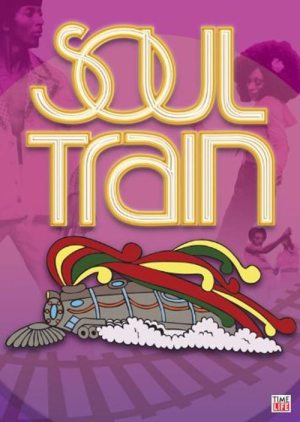 The Blue Notes feat. Teddy Pendergrass, Billy Paul, Lou Rawls, O’Jays, The Spinners, and The Stylistics. The backing band for the O’Jays was MSFB who composed the theme for the show Soul Train (the theme song was called “TSOP” and stood for “The Sound of Philadelphia.”) At the time Soul Train ended its run in 2006, it held the record for longest running show in syndication in U.S. television history.
 Reggae music in Jamaica rose primarily from weak radio signals the population was able to pick up from New Orleans stations. At the end of the 50s, musicians began trying to imitate the sound and ended up with the roots of reggae beats. The rise of reggae beyond its Jamaican roots can be attributed to two main sources. First is the film The Harder They Come featuring Jimmy Cliff as well as Toots & The Maytals on the soundtrack- it was a cult hit in the U.S. The second was Eric Clapton- while recording 461 Ocean Boulevard in Miami in 1974, got his hands on a copy of a Jamaican record from a band called The Wailers- Burnin’. Loved it and covered “I Shot The Sheriff,” effectively bridging the gap for Bob Marley’s consequent prominence.
 Disco was controversial in its commitment to the dance beat as opposed to the musical ambition and aesthetic- as a consequence, white rock took much offense. In its earliest days, many bands refused to play at clubs in the gay community so clubs needed to play dance records. Studios started cutting specific records for dancing. Saturday Night Fever in 1977 separately brought disco to the forefront of the music industry. Return of the producer as important. Key pioneers here are The Bee Gees, Donna Summer, and The Village People (who were assembled by producer Jacque Morali as a front line-up poking fun at gay Greenwich Village stereotypes. This went completely over the heads of not only the white middle class but also the U.S. Navy who attempted to commission the song “In The Navy” as an official theme but cancelled this plan upon realizing their error.)

 Progressive Rock was the new style most consistent with the values of the hippie aesthetic- a push toward accomplishment and ambition. Concept albums huge as well as philosophical lyrics. “Proto-prog” is a term for those albums or artists that pre-empted progressive rock (i.e., Procol Harum, The Moody Blues, The Who.) Representative examples include King Crimson, Emerson Lake & Palmer, Jethro Tull, Yes, Genesis and Pink Floyd’s later years.
 Theatrical Rock came to prominence in this period as well, with the idea of perfromance enriching rock with make-up and costumes. The David Bowie Ziggy Stardust years are perhaps the best example of this, Bowie being a British glam star portraying himself as androgynous- this played a role in the reception of his music. Alice Cooper took theatrical rock a completely different direction with his shows including death on stage, light displays reminiscent of psychedelia. KISS mastered the art of pyrotechnics simultaneously. As a side note, these three artists are certainly not lumped into one genre but rather work well as examples of performance-image driven trends of the mid-70s.



 Living the Dream